Saturday, September 12, 2026
121 API Endpoints, One AI Agent: Why 1:1 Tool Mapping Fails in Production

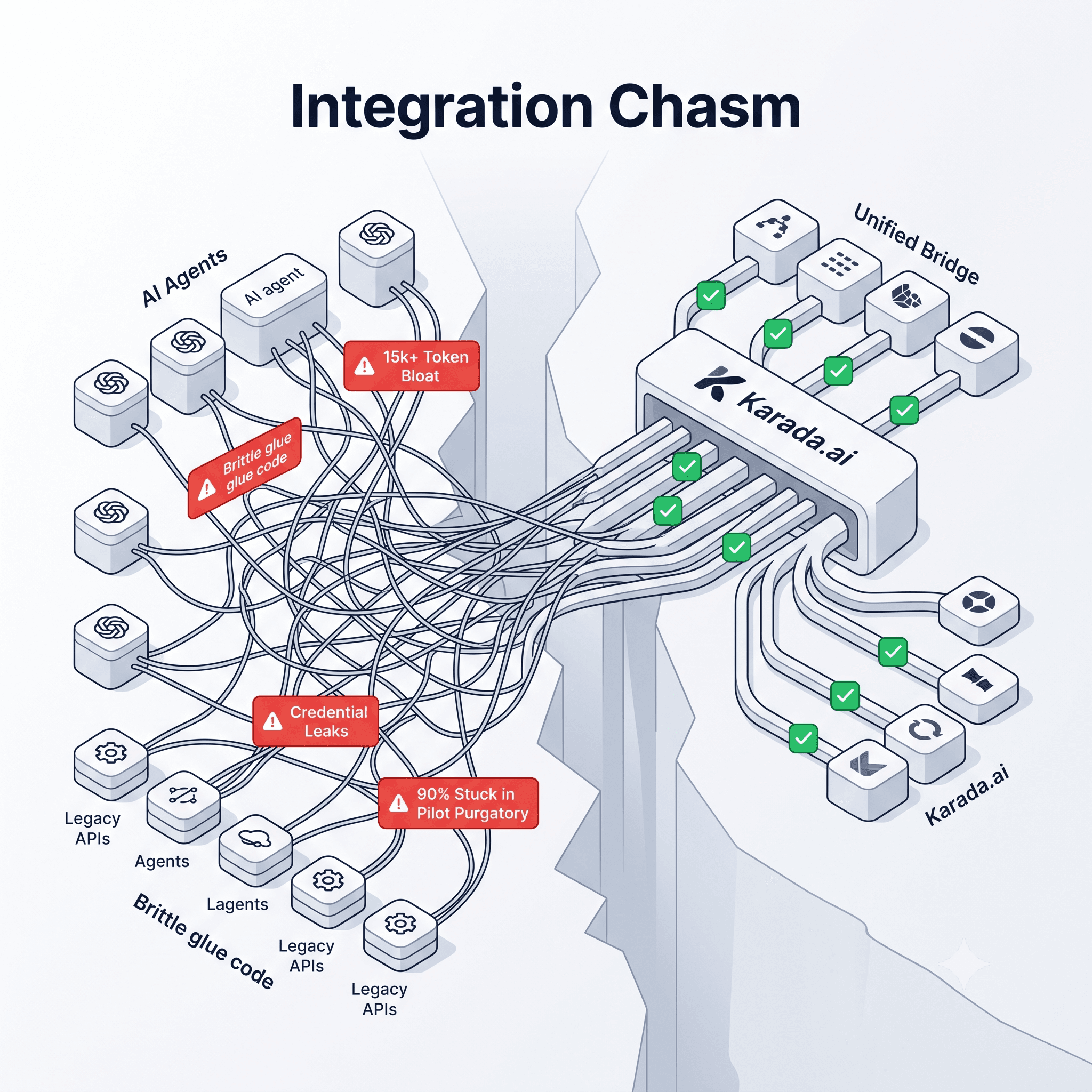
121 API endpoints. One AI agent. Total chaos.
In a recent discussion with James Lewis (Lead Cloud Engineer at Faculty), he broke down a brutal architectural challenge every enterprise hits when making their software "AI-ready":
They had an enterprise platform exposing 121 distinct HTTP endpoints. The initial instinct? Convert all 121 endpoints 1:1 into tools for the AI agent.
The Immediate Production Failure of 1:1 Mapping
Attempting to expose raw CRUD REST endpoints directly to an LLM creates an unsustainable failure surface across three distinct dimensions:
- 15,000+ Tokens Wasted Per Prompt: Just describing the schemas, query parameters, and types for 121 tools consumes over 15k tokens before the model even begins reasoning. This spikes latency and exhausts context budgets.
- Severe Parameter Hallucination: When faced with dozens of overlapping endpoints (e.g. search vs filter vs list), the model frequently hallucinates query parameters across similar routes.
- Brittle Maintenance Surface (O(N) Drift): Every time an upstream API undergoes a minor version bump or parameter rename, the agent silently breaks across 121 individual tool interfaces.
The 7-Verb Blast Shield Architecture
Rather than maintaining 121 fragile adapters, James scrapped the individual tools and collapsed everything into just 7 high-level, composite "verbs."
"What makes that survivable is that the seven verbs are the only code touching the API, so drift lands on seven call sites rather than 121."
By treating composite tools as a blast shield, the engineering team cut their API drift exposure by over 94%. Instead of the LLM navigating low-level CRUD semantics, it operates on high-level business capabilities.
Contract Testing Over Prompt Diffing
Many teams attempt to catch API drift by having an LLM review git diffs and changelogs. But agent diffing only catches documented syntax changes—it misses runtime semantic shifts like unexpected 4xx status codes or modified header requirements.
The robust production standard is running automated contract tests per verb against ephemeral throwaway sandbox instances, ensuring that schema validations and transport payloads match real API behavior.
Action-Level Scopes & Least Privilege
When you collapse 120 endpoints into composite verbs, the biggest architectural hurdle is enforcing least-privilege permissions so bundling read + write operations does not create security blindspots. Enforcing compile-time schema validation and action-level scopes at the transport layer is what keeps agent execution deterministic and secure.
The Playbook for Production Agent Tooling
- Stop 1:1 Mapping: LLMs do not want granular CRUD endpoints. They need high-level, capability-driven verbs.
- Blast Shield Architecture: Collapse hundreds of microservice endpoints into 5–7 core verbs to reduce drift exposure by >90%.
- Contract Testing Over Prompting: Run automated contract test suites per verb against sandbox instances rather than relying on manual prompt audits.
This exact friction is why we built Karada.ai: compiling OpenAPI and Postman specs into strongly typed Go MCP servers with sub-5ms execution, strict runtime contracts, and zero handwritten glue code.
If you are exposing software to AI agents in 2026: Stop asking "How do we expose all 100 endpoints to the model?" and start asking "What are the core verbs the agent actually needs to get work done?"